Recommended Books
-
 Alien bodies : representations of modernity, "race," and nation in early modern dance
by
Blurring the conventional distinction between modern dance and ballet, African American dance, gymnastics and dancing as popular entertainment,Alien Bodieslooks at the way the dance of the 1920s and 1930s mediated the experience of modernity. Through an examination of work by key dancers and choreographers including Josephine Baker, Jean Borlin, George Balanchine, Katherine Dunham, Martha Graham, and Doris Humphrey,Alien Bodiesshows that during the jazz age dance became a privileged site for defining the lived experiences of modernity and contributed to the creation of new desires and identities.
Call Number: MD 1783 .B87 1998ISBN: 0415145953Publication Date: 1998
Alien bodies : representations of modernity, "race," and nation in early modern dance
by
Blurring the conventional distinction between modern dance and ballet, African American dance, gymnastics and dancing as popular entertainment,Alien Bodieslooks at the way the dance of the 1920s and 1930s mediated the experience of modernity. Through an examination of work by key dancers and choreographers including Josephine Baker, Jean Borlin, George Balanchine, Katherine Dunham, Martha Graham, and Doris Humphrey,Alien Bodiesshows that during the jazz age dance became a privileged site for defining the lived experiences of modernity and contributed to the creation of new desires and identities.
Call Number: MD 1783 .B87 1998ISBN: 0415145953Publication Date: 1998 -
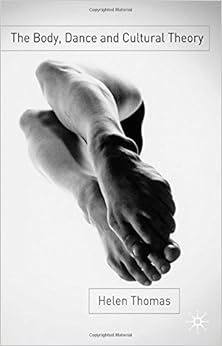 The Body, Dance and Cultural Theory
by
This book takes its point of departure from the overwhelming interest in theories of the body and performativity in sociology and cultural studies in recent years. It explores a variety of ways of looking at dance as a social and artistic (bodily) practice as a means of generating insights into the politics of identity and difference as they are situated and traced through representations of the body and bodily practices. These issues are addressed through a series of case studies.
Call Number: MD 1588.6 .T46 B62 2003ISBN: 0333724313Publication Date: 2003
The Body, Dance and Cultural Theory
by
This book takes its point of departure from the overwhelming interest in theories of the body and performativity in sociology and cultural studies in recent years. It explores a variety of ways of looking at dance as a social and artistic (bodily) practice as a means of generating insights into the politics of identity and difference as they are situated and traced through representations of the body and bodily practices. These issues are addressed through a series of case studies.
Call Number: MD 1588.6 .T46 B62 2003ISBN: 0333724313Publication Date: 2003 -
 Choreographing difference : the body and identity in contemporary dance
by
Albright brings to this sophisticated book more than a decade of involvement in almost all areas of dance and feminist scholarship. In the first chapter, "Mining the Dancefield," she lays the groundwork for much of her later discussion by challenging the ways in which the body has been situated in Western epistemology. Albright describes how dance comprises "a double moment of representation in which bodies are both producing and being produced by cultural discourse of gender, race, ability, sexuality, and age." She uses this theoretical framework to look at Fanny Cerrito (a 19th-century Romantic ballerina) and two 20th-century modern dance icons--Isadora Duncan and Yvonne Rainer--and then discusses Zab Maboungou (contemporary Congolese Canadian choreographer) to demonstrate "how her dancing elicits the audience's witnessing by doubling her somatic and cultural identities." In successive chapters Albright continues to discuss each person/dance with the same critical intensity and scholarly rigor that she brings to the first. Chapter 5 is especially powerful: it focuses on autobiography and the work of Blondell Cummings and David Dorfman, John Martin's "Form and Metakinesis" (The Modern Dance, 1933) and Suzanne Langer's "The Magic Circle" (Feeling and Form, 1953), universalized and abstracted dance. Albright has personalized dance and made it what it is meant to be: a living, changing art form that is informed by all who participate in the challenge of making meaning.
Call Number: MD 1588.6 .A42 1997ISBN: 0819563153Publication Date: 1997
Choreographing difference : the body and identity in contemporary dance
by
Albright brings to this sophisticated book more than a decade of involvement in almost all areas of dance and feminist scholarship. In the first chapter, "Mining the Dancefield," she lays the groundwork for much of her later discussion by challenging the ways in which the body has been situated in Western epistemology. Albright describes how dance comprises "a double moment of representation in which bodies are both producing and being produced by cultural discourse of gender, race, ability, sexuality, and age." She uses this theoretical framework to look at Fanny Cerrito (a 19th-century Romantic ballerina) and two 20th-century modern dance icons--Isadora Duncan and Yvonne Rainer--and then discusses Zab Maboungou (contemporary Congolese Canadian choreographer) to demonstrate "how her dancing elicits the audience's witnessing by doubling her somatic and cultural identities." In successive chapters Albright continues to discuss each person/dance with the same critical intensity and scholarly rigor that she brings to the first. Chapter 5 is especially powerful: it focuses on autobiography and the work of Blondell Cummings and David Dorfman, John Martin's "Form and Metakinesis" (The Modern Dance, 1933) and Suzanne Langer's "The Magic Circle" (Feeling and Form, 1953), universalized and abstracted dance. Albright has personalized dance and made it what it is meant to be: a living, changing art form that is informed by all who participate in the challenge of making meaning.
Call Number: MD 1588.6 .A42 1997ISBN: 0819563153Publication Date: 1997 -
 Dance and Gender
by
The papers in this issue are critical reflections from the 1994 annual Congress on Research in Dance, Engendering Dance / Engendering Knowledge: Dance, Gender, and Interdisciplinary Dialogues in the Arts, which focused on the impact of gender on the dance discipline.
Call Number: MD 1595 .D36 G76 1998ISBN: 9057550733Publication Date: 1998
Dance and Gender
by
The papers in this issue are critical reflections from the 1994 annual Congress on Research in Dance, Engendering Dance / Engendering Knowledge: Dance, Gender, and Interdisciplinary Dialogues in the Arts, which focused on the impact of gender on the dance discipline.
Call Number: MD 1595 .D36 G76 1998ISBN: 9057550733Publication Date: 1998 -
 Dance in a World of Change: reflections on globalization and cultural difference
by
Dance in a World of Change: Reflections on Globalization and Cultural Difference presents a range of international perspectives on dance pedagogy, the body, performance, and dance and culture. The text expands the discourse of dance that connects it to the critical, political, moral, and aesthetic dimensions of contemporary society, and it explores how globalization is influencing and shaping the future of dance. The contributing writers hail from around the world: South Africa, Brazil, Croatia, Ireland, Canada, Taiwan, New Zealand, the United Kingdom, Holland, Jamaica, and the United States.
Call Number: MD 1588.6 .D373 S52 2008ISBN: 9780736069434Publication Date: 2008
Dance in a World of Change: reflections on globalization and cultural difference
by
Dance in a World of Change: Reflections on Globalization and Cultural Difference presents a range of international perspectives on dance pedagogy, the body, performance, and dance and culture. The text expands the discourse of dance that connects it to the critical, political, moral, and aesthetic dimensions of contemporary society, and it explores how globalization is influencing and shaping the future of dance. The contributing writers hail from around the world: South Africa, Brazil, Croatia, Ireland, Canada, Taiwan, New Zealand, the United Kingdom, Holland, Jamaica, and the United States.
Call Number: MD 1588.6 .D373 S52 2008ISBN: 9780736069434Publication Date: 2008 -
 Dance, Modernity and Culture: explorations in the sociology of dance
by
By examining the development of modern dance in the USA in the inter-war period, Thomas develops a framework for analysing dance from a sociological perspective. She applies her approach to, among others, St Denis, Ted Shawn, and Martha Graham.
Call Number: MD 1588.6 .T46 1995ISBN: 0415087937Publication Date: 1995
Dance, Modernity and Culture: explorations in the sociology of dance
by
By examining the development of modern dance in the USA in the inter-war period, Thomas develops a framework for analysing dance from a sociological perspective. She applies her approach to, among others, St Denis, Ted Shawn, and Martha Graham.
Call Number: MD 1588.6 .T46 1995ISBN: 0415087937Publication Date: 1995 -
 Dance, Power, and Difference: critical and feminist perspectives in dance education
by
In Dance, Power, and Difference, eight leading dance educators from around the world examine the fundamental values and goals of dance and dance education. Using a variety of approaches-including general critique, case studies, and personal histories-Dance, Power, and Difference provides a foundation for reconstructing dance education in light of critical, social, and cultural concerns. This is not an answer book, however. It is a thought-provoking book that encourages readers to question traditional practices and develop a personal philosophy that is both critical and feminist. Dance, Power, and Difference seeks to transform the way readers think about dance-not only regarding how it is taught, researched, and critiqued, but also in terms of its purpose and aims. The contributors link dance to themes of human emancipation, multicultural awareness, and gender awareness.
Call Number: MD 1589 .D38 1998ISBN: 0880117478Publication Date: 1998
Dance, Power, and Difference: critical and feminist perspectives in dance education
by
In Dance, Power, and Difference, eight leading dance educators from around the world examine the fundamental values and goals of dance and dance education. Using a variety of approaches-including general critique, case studies, and personal histories-Dance, Power, and Difference provides a foundation for reconstructing dance education in light of critical, social, and cultural concerns. This is not an answer book, however. It is a thought-provoking book that encourages readers to question traditional practices and develop a personal philosophy that is both critical and feminist. Dance, Power, and Difference seeks to transform the way readers think about dance-not only regarding how it is taught, researched, and critiqued, but also in terms of its purpose and aims. The contributors link dance to themes of human emancipation, multicultural awareness, and gender awareness.
Call Number: MD 1589 .D38 1998ISBN: 0880117478Publication Date: 1998 -
 Dance, Sex, and Gender: signs of identity, dominance, defiance, and desire
by
Although many recent books deal with dance, with sex, and with gender, Hanna draws these topics together with new insight. She shows how the attitudes, values, and practices surrounding sex and gender are symbolized through the medium of dance. The author surveys many cultures and many kinds of dance, but her focus is on modern Western theatrical dance as the best index of prevailing patterns. Hanna argues that dance is symbolic communication that expresses sexual desires, fantasies, and cultural prescriptions as well as prevailing gender roles. Sometimes this is explicit and open, as in India and Africa. Or, as in our own recent cultural past, it is veiled in artistry that is consciously considered aesthetic--not erotic, not gender directive. Since the 1960s, rapidly changing attitudes about sexuality and gender roles and identity are reflected in spectacular modifications in the messages given by modern dance artists. Hanna draws on anthropological, psychological, and semiotic theory, and writes out of a profound knowledge of the history and theory of dance.
Call Number: MD 1595 .H36 1988ISBN: 0226315509Publication Date: 1988
Dance, Sex, and Gender: signs of identity, dominance, defiance, and desire
by
Although many recent books deal with dance, with sex, and with gender, Hanna draws these topics together with new insight. She shows how the attitudes, values, and practices surrounding sex and gender are symbolized through the medium of dance. The author surveys many cultures and many kinds of dance, but her focus is on modern Western theatrical dance as the best index of prevailing patterns. Hanna argues that dance is symbolic communication that expresses sexual desires, fantasies, and cultural prescriptions as well as prevailing gender roles. Sometimes this is explicit and open, as in India and Africa. Or, as in our own recent cultural past, it is veiled in artistry that is consciously considered aesthetic--not erotic, not gender directive. Since the 1960s, rapidly changing attitudes about sexuality and gender roles and identity are reflected in spectacular modifications in the messages given by modern dance artists. Hanna draws on anthropological, psychological, and semiotic theory, and writes out of a profound knowledge of the history and theory of dance.
Call Number: MD 1595 .H36 1988ISBN: 0226315509Publication Date: 1988 -
 Dancing Women: female bodies on stage
by
Dancing Women: Female Bodies Onstage is a spectacular and timely contribution to dance history, recasting canonical dance since the early nineteenth century in terms of a feminist perspective. Setting the creation of specific dances in socio-political and cultural contexts, Sally Banes shows that choreographers have created representations of women that are shaped by - and that in part shape - society's continuing debates about sexuality and female identity. Using an interpretive strategy different from that of other feminist dance historians, who have stressed either victimization or celebration of women, Banes finds a much more complex range of cultural representations of gender identities.
Call Number: MD 1799.4 .B35 1998ISBN: 0415096715Publication Date: 1998
Dancing Women: female bodies on stage
by
Dancing Women: Female Bodies Onstage is a spectacular and timely contribution to dance history, recasting canonical dance since the early nineteenth century in terms of a feminist perspective. Setting the creation of specific dances in socio-political and cultural contexts, Sally Banes shows that choreographers have created representations of women that are shaped by - and that in part shape - society's continuing debates about sexuality and female identity. Using an interpretive strategy different from that of other feminist dance historians, who have stressed either victimization or celebration of women, Banes finds a much more complex range of cultural representations of gender identities.
Call Number: MD 1799.4 .B35 1998ISBN: 0415096715Publication Date: 1998 -
 The Male Dancer: bodies, spectacle, sexualities
by
In this challenging and lively book, Ramsey Burt examines the representation of masculinity in twentieth century dance. Taking issue with formalist and modernist accounts of dance, which dismiss gender and sexuality as irrelevant, he argues that prejudices against male dancers are rooted in our ideas about the male body and male behavior. Building upon ideas about the gendered gaze developed by film and feminist theorists, Ramsey Burt provides a provocative theory of spectatorship dance. He uses this to examine the work of choreorgraphers like Nijinksy, Graham, and Bausch, while relating their dances to the social, political and artistic contexts in which they were produced. Within these re-readings, he identifies a distinction between institutionalized and modernist dance which evokes an essentialist, heroic "hypermasculinity"; one which is valorized with reference to nature, heterosexuality and religion, and radical, avant-garde choreography which challenges and disrupts dominant ways ofrepresentation of masculinity.
Call Number: MD 1595 .B87 M34 1995ISBN: 041508900XPublication Date: 1995
The Male Dancer: bodies, spectacle, sexualities
by
In this challenging and lively book, Ramsey Burt examines the representation of masculinity in twentieth century dance. Taking issue with formalist and modernist accounts of dance, which dismiss gender and sexuality as irrelevant, he argues that prejudices against male dancers are rooted in our ideas about the male body and male behavior. Building upon ideas about the gendered gaze developed by film and feminist theorists, Ramsey Burt provides a provocative theory of spectatorship dance. He uses this to examine the work of choreorgraphers like Nijinksy, Graham, and Bausch, while relating their dances to the social, political and artistic contexts in which they were produced. Within these re-readings, he identifies a distinction between institutionalized and modernist dance which evokes an essentialist, heroic "hypermasculinity"; one which is valorized with reference to nature, heterosexuality and religion, and radical, avant-garde choreography which challenges and disrupts dominant ways ofrepresentation of masculinity.
Call Number: MD 1595 .B87 M34 1995ISBN: 041508900XPublication Date: 1995 -
 The Male Dancer: bodies, spectacle, sexualities, 2nd ed.
by
In this second edition of his study of the tradition of Western modernist dance, Burt (De Monfort University) focuses on "the meanings that come into play when men dance on stage." Beginning by framing the social and historical conditions of production and reception of dance, Burt scrutinizes social class, gender, race, and sexuality to interrogate the homophobic discourse haunting male dancers and the elusive gendered gaze objectifying the male body. Burt continues with the legacy of Ballets Russes dancer Vaslav Nijinsky, who transformed ideas about the male dancer in the 20th century. Turning to the US, the author focuses on choreographers such as Ted Shawn, Martha Graham, and Merce Cunningham to demonstrate the dance industry's evolving refusal to conform to the nation's masculine, virile ideals. Burt devotes the final three chapters to more contemporary European and American choreographers Arnie Zane, Bill T. Jones, and Matthew Bourne--e.g., who have responded to these developments. Those interested in the history and sexual politics of dance will find that this fascinating book, with its detailed index and illustrations, dialogues well with Peter Stoneley's A Queer History of the Ballet (CH, Oct'07, 45-0789) and Stavros Stavrou Karayanni's Dancing Fear and Desire (2004).
Call Number: MD 1595 .B87 M34 2007ISBN: 041597576XPublication Date: 2007
The Male Dancer: bodies, spectacle, sexualities, 2nd ed.
by
In this second edition of his study of the tradition of Western modernist dance, Burt (De Monfort University) focuses on "the meanings that come into play when men dance on stage." Beginning by framing the social and historical conditions of production and reception of dance, Burt scrutinizes social class, gender, race, and sexuality to interrogate the homophobic discourse haunting male dancers and the elusive gendered gaze objectifying the male body. Burt continues with the legacy of Ballets Russes dancer Vaslav Nijinsky, who transformed ideas about the male dancer in the 20th century. Turning to the US, the author focuses on choreographers such as Ted Shawn, Martha Graham, and Merce Cunningham to demonstrate the dance industry's evolving refusal to conform to the nation's masculine, virile ideals. Burt devotes the final three chapters to more contemporary European and American choreographers Arnie Zane, Bill T. Jones, and Matthew Bourne--e.g., who have responded to these developments. Those interested in the history and sexual politics of dance will find that this fascinating book, with its detailed index and illustrations, dialogues well with Peter Stoneley's A Queer History of the Ballet (CH, Oct'07, 45-0789) and Stavros Stavrou Karayanni's Dancing Fear and Desire (2004).
Call Number: MD 1595 .B87 M34 2007ISBN: 041597576XPublication Date: 2007 -
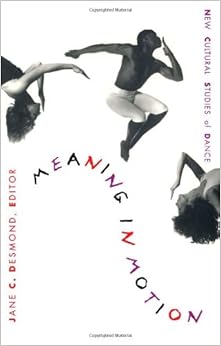 Meaning in Motion: new cultural studies of dance
by
Dance, whether considered as an art form or embodied social practice, as product or process, is a prime subject for cultural analysis. Yet only recently have studies of dance become concerned with the ideological, theoretical, and social meanings of dance practices, performances, and institutions. InMeaning in Motion, Jane C. Desmond brings together the work of critics who have ventured into the boundaries between dance and cultural studies, and thus maps a little-known and rarely explored critical site. Writing from a broad range of perspectives, contributors from disciplines as varied as art history and anthropology, dance history and political science, philosophy and women’s studies chart the questions and challenges that mark this site. How does dance enact or rework social categories of identity? How do meanings change as dance styles cross borders of race, nationality, or class? How do we talk about materiality and motion, sensation and expressivity, kinesthetics and ideology? The authors engage these issues in a variety of contexts: from popular social dances to the experimentation of the avant-garde; from nineteenth-century ballet and contemporary Afro-Brazilian Carnival dance to hip hop, the dance hall, and film; from the nationalist politics of folk dances to the feminist philosophies of modern dance. Giving definition to a new field of study,Meaning in Motion broadens the scope of dance analysis and extends to cultural studies new ways of approaching matters of embodiment, identity, and representation.
Call Number: MD 1588.6 .M42 1997ISBN: 0822319365Publication Date: 1997
Meaning in Motion: new cultural studies of dance
by
Dance, whether considered as an art form or embodied social practice, as product or process, is a prime subject for cultural analysis. Yet only recently have studies of dance become concerned with the ideological, theoretical, and social meanings of dance practices, performances, and institutions. InMeaning in Motion, Jane C. Desmond brings together the work of critics who have ventured into the boundaries between dance and cultural studies, and thus maps a little-known and rarely explored critical site. Writing from a broad range of perspectives, contributors from disciplines as varied as art history and anthropology, dance history and political science, philosophy and women’s studies chart the questions and challenges that mark this site. How does dance enact or rework social categories of identity? How do meanings change as dance styles cross borders of race, nationality, or class? How do we talk about materiality and motion, sensation and expressivity, kinesthetics and ideology? The authors engage these issues in a variety of contexts: from popular social dances to the experimentation of the avant-garde; from nineteenth-century ballet and contemporary Afro-Brazilian Carnival dance to hip hop, the dance hall, and film; from the nationalist politics of folk dances to the feminist philosophies of modern dance. Giving definition to a new field of study,Meaning in Motion broadens the scope of dance analysis and extends to cultural studies new ways of approaching matters of embodiment, identity, and representation.
Call Number: MD 1588.6 .M42 1997ISBN: 0822319365Publication Date: 1997 -
 Moving Words: re-writing dance
by
Dance scholarship is in the midst of explosive growth today, due in part to the current interest in the body, gender, and in performance studies in general, as well as to dancers and choreographers whose innovative work is reinvigorating the performance-going public's interest in dance. NowMoving Wordsoffers students, scholars, and critics of dance and performance the latest word on the debates swirling within the world of dance. Contributors confront basic questions of definition and interpretation within dance studies, while at the same time examing broader issues, such as the body, gender, class, race, nationalism, and cross-cultural exchange. Specific essays address such topics as the black male body in dance, gender and subversions in the dances of Mark Morris, race and nationalism in Martha Graham's American Document, and the history of Asian dance.
Call Number: MD 1600 .M68 1996ISBN: 0415125421Publication Date: 1996
Moving Words: re-writing dance
by
Dance scholarship is in the midst of explosive growth today, due in part to the current interest in the body, gender, and in performance studies in general, as well as to dancers and choreographers whose innovative work is reinvigorating the performance-going public's interest in dance. NowMoving Wordsoffers students, scholars, and critics of dance and performance the latest word on the debates swirling within the world of dance. Contributors confront basic questions of definition and interpretation within dance studies, while at the same time examing broader issues, such as the body, gender, class, race, nationalism, and cross-cultural exchange. Specific essays address such topics as the black male body in dance, gender and subversions in the dances of Mark Morris, race and nationalism in Martha Graham's American Document, and the history of Asian dance.
Call Number: MD 1600 .M68 1996ISBN: 0415125421Publication Date: 1996 -
 Moving History/Dancing Cultures: a dance history reader
by
This new collection of essays surveys the history of dance in an innovative and wide-ranging fashion. Editors Ann Dils and Ann Cooper Albright address the current dearth of comprehensive teaching material in the dance history field through the creation of a multifaceted, nonlinear, yet well-structured and comprehensive survey of select moments in the development of both American and World dance. This book is illustrated with over 50 photographs, and makes an ideal text for undergraduate classes in dance ethnography, criticism or appreciation, as well as dance history -- particularly those with a cross-cultural, contemporary, or an American focus.The reader is organized into four thematic sections which allow for varied and individualized course use: Thinking about Dance History: Theories and Practices, World Dance Traditions, America Dancing, and Contemporary Dance: Global Contexts. The editors have structured the readings with the understanding that contemporary theory has thoroughly questioned the discursive construction of history and the resultant canonization of certain dances, texts and points of view. The historical readings are presented in a way that encourages thoughtful analysis and allows the opportunity for critical engagement with the text.
Call Number: MD 1601 .M68 D54 2001ISBN: 0819564133Publication Date: 2001
Moving History/Dancing Cultures: a dance history reader
by
This new collection of essays surveys the history of dance in an innovative and wide-ranging fashion. Editors Ann Dils and Ann Cooper Albright address the current dearth of comprehensive teaching material in the dance history field through the creation of a multifaceted, nonlinear, yet well-structured and comprehensive survey of select moments in the development of both American and World dance. This book is illustrated with over 50 photographs, and makes an ideal text for undergraduate classes in dance ethnography, criticism or appreciation, as well as dance history -- particularly those with a cross-cultural, contemporary, or an American focus.The reader is organized into four thematic sections which allow for varied and individualized course use: Thinking about Dance History: Theories and Practices, World Dance Traditions, America Dancing, and Contemporary Dance: Global Contexts. The editors have structured the readings with the understanding that contemporary theory has thoroughly questioned the discursive construction of history and the resultant canonization of certain dances, texts and points of view. The historical readings are presented in a way that encourages thoughtful analysis and allows the opportunity for critical engagement with the text.
Call Number: MD 1601 .M68 D54 2001ISBN: 0819564133Publication Date: 2001 -
 The Routledge Dance Studies Reader
by
The Routledge Dance Studies Reader represents the range and diversity of writings from the 1980s and 1990s, providing contemporary perspectives on ballet, modern dance, postmodern 'movement performance' jazz, South Asian dance and Black dance. In an enlightening introduction, Alexandra Carter traces the development of dance studies internationally and surveys current debates about the methods and methodologies appropriate to the study of dance. The collection is divided into five sections, each with an editorial preface, and featuring contributions by choreographers, performers, critics and scholars of dance and related disciplinary fields
Call Number: MD 1594 .R68 1999ISBN: 0415164478Publication Date: 1998
The Routledge Dance Studies Reader
by
The Routledge Dance Studies Reader represents the range and diversity of writings from the 1980s and 1990s, providing contemporary perspectives on ballet, modern dance, postmodern 'movement performance' jazz, South Asian dance and Black dance. In an enlightening introduction, Alexandra Carter traces the development of dance studies internationally and surveys current debates about the methods and methodologies appropriate to the study of dance. The collection is divided into five sections, each with an editorial preface, and featuring contributions by choreographers, performers, critics and scholars of dance and related disciplinary fields
Call Number: MD 1594 .R68 1999ISBN: 0415164478Publication Date: 1998 -
 The Routledge Dance Studies Reader, 2nd ed.
by
The second edition of The Routledge Dance Studies Reader offers fresh critical perspectives on classic and modern dance forms, including ballroom, tango, Hip-hop, site-specific performance, and disability in dance. Alexandra Carter and Janet O’Shea deliver a substantially revised and updated collection of key texts, featuring an enlightening new introduction, which tracks differing approaches to dance studies. Important articles from the first edition are accompanied by twenty new works by leading critical voices. The articles are presented in five thematic sections, each with a new editorial introduction and further reading.
Call Number: MD 1594 .R68 2010ISBN: 0415485991Publication Date: 2010
The Routledge Dance Studies Reader, 2nd ed.
by
The second edition of The Routledge Dance Studies Reader offers fresh critical perspectives on classic and modern dance forms, including ballroom, tango, Hip-hop, site-specific performance, and disability in dance. Alexandra Carter and Janet O’Shea deliver a substantially revised and updated collection of key texts, featuring an enlightening new introduction, which tracks differing approaches to dance studies. Important articles from the first edition are accompanied by twenty new works by leading critical voices. The articles are presented in five thematic sections, each with a new editorial introduction and further reading.
Call Number: MD 1594 .R68 2010ISBN: 0415485991Publication Date: 2010 -
Women and Dance: sylphs and sirens by Dance is a marginalized art form which has frequently been ignored in the various debates about cultural practices. This book redresses the balance and opens up some important areas for discussion. Christy Adair argues that dance is an arena for feminist practice particularly as feminism has recognized the centrality of the arts in shaping our ideas about ourselves and our society. Women's high profile in dance leads to the popular opinion that it is a female art form. But women tend to interpret rather than to create dance images. This book highlights the consequences for female dancers of the development of western dance technique in a patriarchal society. The constraints placed upon them are revealed in the texture of the dances discussed. Christy Adair shows how challenging traditional images of women in dance offers us visions for the future. But, she argues, in order for women's perspectives to be clearly established and influential, women must also have access to positions of power, such as directors and choreographers.
Call Number: MD 1799.4 .A32 1992ISBN: 0814706215Publication Date: 1992


Get Help
Music & Dance Help Desk
4432 HBLL - Level 4
Music & Dance Web Page
Hours: M-Th: 8am-9pm;
F: 8am-6pm; Sat:10am-6pm
Phone:  (801) 422-1725
E-mail: music_reference@byu.edu